
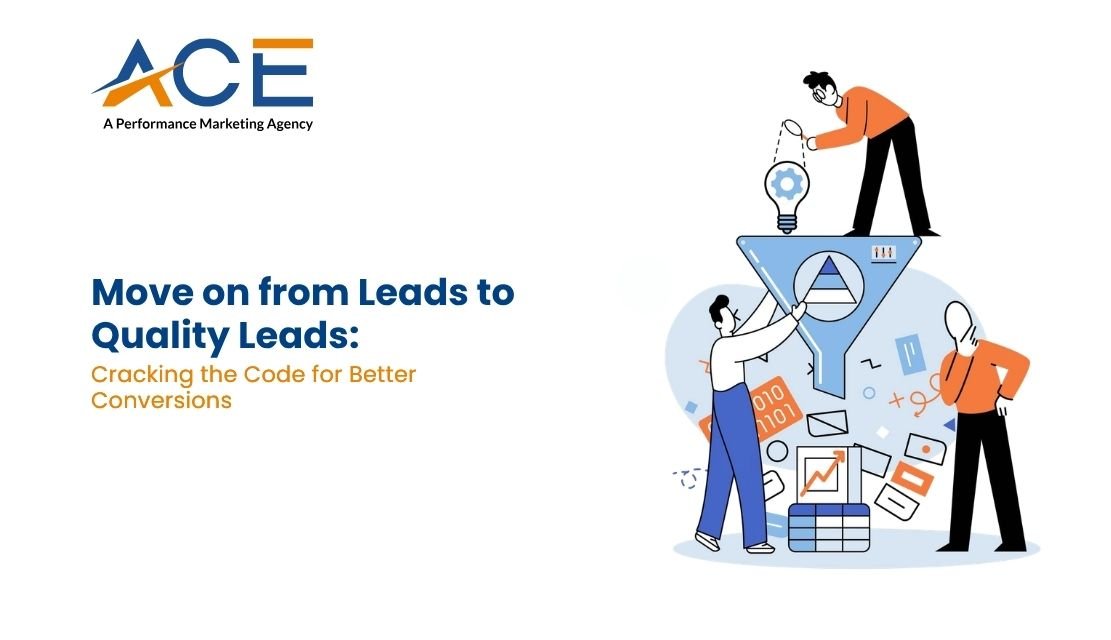
There’s a point that most marketing teams have to face at some point in their careers. The dashboard is showing leads coming in steadily, the numbers look healthy and yet sales keeps complaining that nothing converts. The pipeline looks full, but revenue does not follow.
This disconnection between lead volume and actual business results indicates a fundamental problem. Counting leads but not quality gives the appearance of progress and wastes resources on prospects who were never going to buy. The shift away from measuring quantity and toward prioritizing quality changes everything – from the way you generate leads, to the way you measure success.
Chasing lead numbers is productive. More leads means more opportunities to make a sale, more chances for sales to close deals, more potential revenue. But this thinking does not consider what happens after someone fills out a form.
Sales teams spend a lot of time chasing after prospects who do not fit what you are actually selling. They make calls to people that downloaded content out of curiosity but have no budget, authority, or actual need. Every hour lost on an unqualified lead is lost time on a person who is ready to buy.
The costs are compounded beyond the time wasted. When sales continually get leads that are going nowhere, trust between marketing and sales is lost. Marketing celebrates lead targets hit but sales misses revenue goals. The misalignment causes friction that renders both teams less effective.
Volume-first thinking is also distorting marketing strategy. Campaigns are optimized for the lowest cost per lead, instead of the leads that convert the most. Targeting expands to reach more people instead of the right people. Forms get simplified to reduce friction, collecting more submissions but less qualifying information.
The result is a funnel that appears to be full but does not function well. You’ve given up quality for quantity and you just don’t realise the exchange rate is working against you.
Quality isn’t a vague concept – it’s measurable criteria that is predictive of conversion likelihood. Before you can generate better leads, you need to be clear on what better means to your individual business.
Fit determines whether the lead is a good fit for your ideal customer profile. Do they work in industries you serve? Is their company the size of a right? Do they have roles that have purchasing power? A perfect fit from your target segment converts at dramatically higher rates than a random contact who happened to show interest.
Intent is an indicator of whether a person is actually in a buying process. Somebody who is researching for solutions to an active problem acts differently than someone who is browsing casually. Intent indicators are specific searches, consumption patterns, and engagement with bottom funnel content such as pricing pages or comparison guides.
Timing is important because even perfect fit, high intent leads might not be ready now. Understanding where someone is in their buying timeline helps you respond appropriately – immediate sales outreach for buyers who are ready, nurturing sequences for those earlier in their process.
Engagement level is the extent to which someone has paid attention to your content and communications. Multiple touchpoints in different channels imply a real interest. A one-time form fill without any follow-up engagement is often an indicator of lower commitment.
Combining these dimensions creates a picture of lead quality which goes beyond gut feeling. You can give points based on a systematic scoring system instead of giving equal points to all regression forms.
Generating quality leads begins with your methods of attracting and capturing prospects. Small changes in approach make a big difference on who enters your pipeline.
Targeting is more important than reach. Narrower audience definitions – this means fewer total leads but greater relevance. Rather than speak to everyone who is vaguely interested in your category, focus on the specific roles, industries and characteristics of companies that are a good match for your best customers.
Content alignment influences who responds. Generic awareness content attracts broad audiences including many who’ll never buy. Contenting specific problems that your solution solves attracts people with exact problems solved. The better your content matches the needs of buyers, the more qualified your respondents will be.
Qualification questions in forms filter before the leads enter your system. Asking about company size or timeline or specific needs introduces friction that lowers the total submissions but dramatically improves the quality. The people willing to answer are qualified through the effort of filling out the form.
Progressive profiling collects qualifying information over a number of interactions, instead of requiring everything at once. First touch gets basic contact details. Subsequent engagements add company information, specific needs and buying timeline. By the time someone goes to sales, you know their story without having scared them off with long initial forms.
Channel evaluation should look at quality, and not just cost. Some sources provide cheap leads that never convert. Others are more expensive per lead but yield prospects with a lot of prospects who become customers. Measuring cost per acquisition as opposed to cost per lead will show which channels are actually delivering value.
Lead scoring converts subjective judgement into a repeatable process. Rather than sales making decisions case-by-case who deserves attention, scoring identifies priority leads automatically.
Effective scoring includes a combination of explicit information about what leads tell you about themselves and behavioral signals about what their actions tell you about interest level.
Explicit criteria may include a point for matching your target industry, having decision-making positions, working for companies of the appropriate size, or indicating near-term purchase timelines. These characteristics are predictive of fit independent of engagement.
Behavioral scoring monitors behavior that indicates intent: visiting pricing pages, downloading bottom funnel content, attending product-focused webinars, or returning to your site several times. Each action is added to a cumulative score of the intensity of the engagement.
Routing is based on threshold scores. Above certain leads go straight to sales. Those below go into nurturing sequences intended to develop engagement until they qualify. Leads that do not meet minimum fit criteria may not be pursued at all.
The specific scoring model is of less importance than the fact that there is a model. Even simple scoring that differentiates hot leads and cold ones improves conversion rates by helping focus sales attention in a proper way.
Quality-focused generation doesn’t mean cutting down everyone who is not ready to buy right now. Many prospects require time and information before they convert. Nurturing holding relationships until the time is right.
Effective nurturing offers value without constant sales pressure. Educational content that helps prospects understand their problems puts you in the position of a resource rather than a pest. Regular touchpoints keep your brand present but not overwhelming.
Trigger-based nurturing is based on the action of prospects. Someone coming to your pricing page may get case studies showing ROI. Someone getting a comparison guide download may receive some contents that address common evaluation criteria. Such contextual responses are felt to be relevant, rather than generic.
Scoring continues all the way through nurturing. Prospects that engage regularly see their scores rise until they pass thresholds that lead to sales outreach. Those who walk away can be deprioritised – resources conserved for more promising opportunities.
The aim is to be there when the prospects are ready to purchase, so you’re already on their radar as a trusted choice. Nurturing bridges this gap between initial interest to purchase readiness.
Quality lead generation involves agreement between marketing and sales on what it means to have a qualified lead. Without the shared definitions, the teams are optimizing for different outcomes.
Service level agreements codify expectations. Marketing agrees to provide leads of certain types. Sales agrees to follow up as defined timeframes. Both sides are clearly accountable.
Feedback loops are used to bring about continuous improvement. When sales starts reporting that they’re seeing lead types that don’t seem to convert, marketing will change targeting and qualification. When marketing finds tendencies in successful deals, these find their way into ideal customer profiles.
Joint accountability for conversion metrics, not just lead volume, creates alignment of incentives. When both teams are measured on pipeline and revenue as opposed to handoff measurements, they work together instead of pointing fingers.
Shifting to quality means shifting metrics. Lead count is not as important as conversion rate in every funnel stage. Cost per lead is less important than cost per acquisition or customer lifetime value.
Track the movement of leads from various sources, campaigns, and channels through your funnel. Identify what inputs lead to customers. Double down on what works, cut investment in what doesn’t.
Attribution must link marketing activities to revenue results and not just form submissions. This long-term perspective helps to see the true effectiveness of the marketing efforts and makes it worthwhile to invest in approaches that emphasize quality over quantity and thus result in fewer leads.
Moving from lead volume to lead quality is fundamentally changing the way marketing creates value. Quality leads – those that match your ideal customer profile with real intent and at the right time convert at radically higher rates than random contacts. Building quality into lead generation by accurately targeting, qualifying content, and systematically scoring leads to make sure sales teams are spending time on prospects likely to become customers. Nurturing involves keeping relationships with not-yet-ready prospects until the time is right. Aligned metrics and shared accountability between marketing and sales keeps both teams focused on outcomes that matter.
High quality leads match your ideal customer profile, demonstrate real intent to buy, have the right timing in their buying process and show engagement with your content. These factors together are much better predictors of conversion likelihood than simply contact information.
Instead of selecting one or the other, create systems that create volume within constraints of quality. Employ precise targeting to target the right audiences, implement scoring to prioritize the best leads and nurture those who aren’t ready right now. You keep your pipeline going while you make sure sales are focused on convertible prospects.
Lead scoring gives points based on fit criteria and behavioral signals (content downloads, page visits, engagement frequency.) Cumulative scores identify which leads are worthy of immediate sales attention versus continued nurturing, automatic prioritization decisions.
Volume-based generation brings in a lot of people that not only don’t fit your ideal customer, but are not truly in buying mode. Sales spends time on prospects who were never going to convert, which decreases overall efficiency. Quantity without quality creates busy pipelines that don’t create revenue.
Together define qualified leads with specific, measurable criteria. Establish service levels agreements for lead delivery and follow-up. Create feedback loops where sales feedback the results of lead and marketing changes accordingly. Measure conversion and revenue, not just handoff metrics, for both teams.

C – 81C, Sector – 8, Noida 201301, India


1025 Beamon Drive, Franklin 37064 Tennessee, USA
Sveavagen 34 111 34 Stockholm, Sweden

Copyright ©ACE. All rights reserved.

