Problem & Business Impact: Most businesses lose 96% of first-time website visitors without a single conversion. That silent exit represents qualified interest walking away from your pipeline. Without a structured Facebook remarketing campaign management strategy, those visitors land on a competitor’s site within hours. The revenue impact compounds every month you operate without intent-based audience segmentation, turning paid acquisition budgets into sunk costs rather than pipeline investments.
Solution & Delivery: ACE Performance Marketing delivers end-to-end Facebook retargeting agency services built around behavioral data, funnel-stage sequencing, and custom audience architecture. From Facebook pixel retargeting services and Conversions API configuration to dynamic creative deployment across Meta placements, every campaign is engineered to recover lost revenue and compress sales cycles. The methodology applies equally to ecommerce brands chasing abandoned carts and B2B companies nurturing multi-stakeholder buying committees.
Credibility & Differentiation: With proven execution across 1,250+ client engagements spanning ecommerce, SaaS, real estate, healthcare, and financial services, this is not a templated approach. Every retargeting framework is custom-built from your data, your funnel behavior, and your revenue objectives. Where other agencies run broad remarketing and call it done, this team builds segmented audience ecosystems that scale with your business.

Every retargeting audience is built from actual on-site behavior, not broad visitor pools. Page-level intent signals, scroll depth, and session frequency determine which prospects enter specific ad sequences. This precision eliminates wasted impressions and ensures ad spend flows toward visitors with genuine purchase or inquiry intent, improving ROAS by targeting readiness rather than recency alone.

Facebook ads retargeting strategy here spans the entire buyer journey, from awareness re-engagement through mid-funnel education to bottom-funnel conversion. Each stage receives dedicated creative, messaging, and bid optimization. This layered approach prevents the common mistake of showing conversion-focused ads to prospects who still need nurturing, resulting in lower cost per qualified lead across every funnel stage.

Retargeting decisions are informed by data from Google Analytics, CRM platforms, and email engagement alongside Meta’s native signals. This cross-channel view identifies which prospects are actively evaluating solutions versus passively browsing. Campaigns benefit from richer audience definitions that single-platform agencies simply cannot build, creating targeting precision that reduces customer acquisition costs measurably.

Post-iOS 14.5 signal loss demands more than basic Pixel reliance. Every engagement begins with server-side Conversions API implementation alongside browser-based tracking to recover 20-30% of lost attribution data. Domain verification, event prioritization, and first-party data strategies are configured before any campaign launches, ensuring Facebook audience targeting services deliver accurate measurement from day one.

Ad fatigue kills retargeting performance faster than budget misallocation. A structured creative rotation framework tests 3-5 ad variations per audience segment weekly, replacing underperformers before frequency thresholds damage click-through rates. This testing cadence sustains engagement over extended retargeting windows, particularly critical for B2B Facebook retargeting services where sales cycles extend beyond 90 days.

Every campaign ties back to revenue outcomes, not vanity metrics. Multi-touch attribution modeling separates retargeting’s true incremental contribution from organic conversions that would have happened regardless. Clients receive clear reporting on cost per acquisition, pipeline influenced, and return on ad spend, enabling confident budget allocation decisions grounded in financial impact rather than platform-reported estimates.
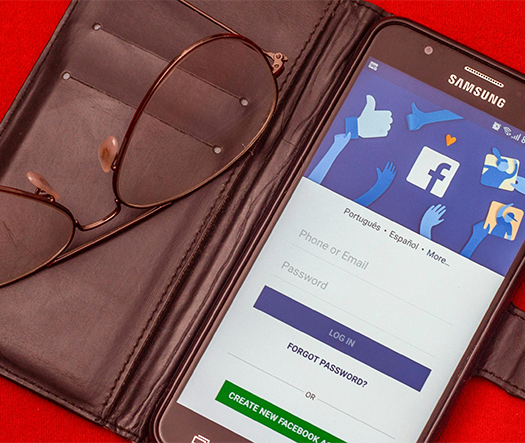
Facebook retargeting transforms passive website traffic into an active revenue channel. When executed with behavioral segmentation and funnel-aware sequencing, custom audience Facebook ads consistently deliver 3-5x higher conversion rates than cold prospecting campaigns. The value extends beyond immediate sales. Structured remarketing builds brand recall, accelerates deal velocity for complex B2B purchases, and reduces overall customer acquisition costs by concentrating spend on prospects who have already demonstrated commercial interest. The specialists behind this practice combine deep Meta platform expertise with performance marketing discipline, ensuring every retargeting dollar generates attributable business outcomes.
Partner with retargeting specialists who deliver.
This structured methodology eliminates guesswork from Facebook remarketing services, moving systematically from data foundation through scaled optimization.

Meta Pixel deployment, Conversions API integration, and domain verification are configured to capture every meaningful visitor interaction. Event prioritization maps eight core conversion actions to your specific funnel. Server-side and browser-side tracking operate in parallel, ensuring iOS privacy restrictions do not create blind spots in your attribution data.

Custom audiences are built from CRM data uploads, website behavior segments, video engagement pools, and lead form interactions. Each audience receives defined entry criteria, membership duration windows, and exclusion rules. Lookalike audiences are modeled from highest-value customer segments, extending reach while maintaining intent alignment across all Meta retargeting services placements.

Every audience segment is assigned to a specific funnel stage with corresponding messaging objectives. Top-funnel re-engagement receives educational content, mid-funnel prospects see case studies and social proof, and bottom-funnel visitors receive direct conversion offers. This sequencing prevents premature sales pressure and mirrors how real buying decisions unfold across multiple touchpoints.

Ad creatives are designed per audience segment and funnel position. Static images, video assets, carousel formats, and dynamic product ads are produced with distinct hooks, value propositions, and calls to action. Every creative variation is cataloged for systematic A/B testing, ensuring performance data drives design decisions rather than subjective preference.

Campaigns launch with controlled budgets, placement optimization across Facebook, Instagram, Messenger, and Audience Network. Bid strategies are selected based on audience size and conversion volume requirements. Frequency caps prevent ad fatigue, and dayparting schedules align delivery with peak engagement windows identified during the tracking foundation phase.

Weekly performance reviews evaluate cost per acquisition, return on ad spend, frequency metrics, and audience saturation rates. Underperforming segments are paused or restructured while winning combinations receive incremental budget increases of 20-30% per cycle. This disciplined scaling approach protects campaign efficiency while expanding revenue contribution month over month.
Across 1,250+ client engagements in ecommerce, SaaS, healthcare, finance, and professional services, these retargeting frameworks have recovered lost revenue, compressed sales cycles, and lowered acquisition costs. Explore the outcomes and judge the methodology on results.
Effective Facebook remarketing agency work demands more than platform proficiency. It requires understanding how different industries buy, research, and evaluate before committing budget or signing contracts. The retargeting frameworks deployed here are built on a foundation of scalable methodology and audience intelligence that adapts to industries with seven-day purchase cycles and those with twelve-month evaluation periods alike. From venture-backed startups to enterprise organizations with complex approval chains, the approach flexes without losing strategic rigor.
Deep execution experience spans ecommerce and D2C brands, B2B technology and SaaS, real estate development, healthcare and medical services, education and edtech, financial services and fintech, professional services, and travel and hospitality. This cross-industry exposure creates compounding advantages. Audience segmentation strategies proven in ecommerce inform B2B Facebook retargeting services with faster iteration cycles. Conversion rate patterns observed in healthcare lead generation sharpen creative testing frameworks applied to financial services campaigns. Every engagement benefits from insights earned across verticals.

Most Facebook ads retargeting agency offerings rely on broad audience pools and generic creative rotation. The practice here has been refined through thousands of campaigns where performance was measured by revenue contribution, not platform metrics. That discipline has earned recognition from clients who demand accountability, transparency, and results that justify continued investment.
Incrementality-First Measurement: Every campaign is evaluated for true incremental revenue lift, separating retargeting-driven conversions from those that would have occurred organically.
Audience Decay Prevention: Proprietary refresh cadences and exclusion logic prevent stale audiences from consuming budget, keeping custom audience targeting services sharp and cost-efficient.
Revenue-Linked Reporting: Dashboards connect retargeting spend directly to CRM pipeline stages and closed revenue, giving leadership financial clarity beyond click and impression data.
Every campaign is built on industry-leading platforms and tools selected for tracking accuracy, audience precision, and optimization speed. These technologies form the operational backbone of every engagement.









Vishal’s team transformed our lease application from a conversion killer into a revenue driver. The 42 percent improvement in conversion rate directly impacted our bottom line, and reducing completion time from eighteen to six minutes made the process actually enjoyable for customers.
TIS took our 2010-era warehouse management portal and completely transformed it into a modern, intuitive platform through deep user research and human-centered design. Customer satisfaction jumped from 42 to 87 percent, and our clients now view the portal as a competitive advantage rather than a necessary evil. The role-based dashboards and mobile responsiveness they designed have fundamentally changed how our customers interact with their inventory data.
TIS transformed our dashboard from a data dump into a decision-making tool. Executives can now identify critical trends in thirty seconds instead of spending hours compiling spreadsheets.
Evaluating a retargeting partner is a strategic decision. Here are the answers that matter most.
Start by evaluating whether the agency builds custom audience strategies specific to your funnel or relies on generic templates. Ask for examples of audience segmentation frameworks they have deployed, not just case study screenshots. A qualified partner should explain how they handle Pixel and Conversions API tracking, how they structure funnel-stage messaging, and how they measure incremental revenue versus last-click attribution. Request references from businesses similar to yours in size, sales cycle length, and industry. Agencies that focus on custom audience targeting services and behavioral segmentation will consistently outperform those offering broad, one-size retargeting packages.
Costs vary based on three components: agency management fees, ad spend budget, and creative production. Management fees from specialized agencies typically range from $1,500 to $5,000 per month for mid-market businesses, with enterprise engagements scaling higher based on campaign complexity and audience volume. Ad spend budgets for effective retargeting generally start at $2,000 monthly for businesses with sufficient website traffic to build meaningful audience pools. Creative production is often bundled or billed separately depending on testing velocity requirements. The total investment should be evaluated against cost per acquisition and return on ad spend, not management fees in isolation.
Initial performance indicators typically emerge within two to three weeks of campaign launch as Meta’s algorithm optimizes delivery against your conversion events. Meaningful statistical significance across audience segments and creative variations usually requires four to six weeks of data accumulation. B2B Facebook retargeting services with longer sales cycles may need eight to twelve weeks before pipeline impact becomes visible in CRM data. The timeline also depends on website traffic volume, because smaller audience pools take longer to generate actionable conversion data. Campaigns built on properly configured tracking infrastructure and well-segmented audiences consistently reach performance benchmarks faster than broadly targeted alternatives.
In practice, these terms are used interchangeably across the industry. Technically, retargeting refers to serving ads to users based on their online behavior tracked through pixels and cookies. Remarketing originally described re-engaging customers through email campaigns using contact lists. Within Meta’s ecosystem, both approaches converge under custom audiences, where you can retarget website visitors via Pixel data and remarket to existing customers via CRM list uploads. A strong Facebook remarketing campaign management strategy incorporates both behavioral retargeting and list-based remarketing to cover every re-engagement pathway available within the platform.
The Facebook Pixel is a browser-based JavaScript code that tracks visitor actions on your website, from page views to purchases. The Conversions API sends the same event data directly from your server to Meta, bypassing browser restrictions, ad blockers, and iOS privacy limitations that reduce Pixel accuracy. Running both simultaneously creates redundant tracking that recovers 20-30% of conversion signals lost to privacy changes since iOS 14.5. Facebook pixel retargeting services that combine both methods deliver more accurate audience building, stronger optimization signals, and better attribution data than Pixel-only implementations.
Facebook custom audience services support multiple source types. Website custom audiences are built from Pixel and Conversions API data, segmenting visitors by pages viewed, actions taken, or time spent. Customer list audiences match your CRM contacts against Meta profiles using hashed email addresses or phone numbers. Engagement audiences target users who have interacted with your Facebook page, Instagram profile, videos, lead forms, or shopping experiences. App activity audiences track in-app behavior for mobile businesses. Each audience type supports duration windows, exclusion rules, and combination logic that enables precise audience architecture tailored to your specific funnel structure.
Yes. B2B Facebook retargeting services require a different strategic framework than ecommerce, but they deliver strong results when executed with funnel-aware sequencing. The key difference is accommodating longer sales cycles, multiple decision-makers, and content-driven nurturing rather than direct purchase conversion. Effective B2B retargeting uses page-level behavioral segmentation (pricing page visitors versus blog readers receive different messaging), CRM list targeting for account-based marketing, and sequential content delivery that moves prospects from educational resources through case studies to consultation requests. Frequency capping is especially important in B2B to prevent brand fatigue across extended evaluation periods.
Ad fatigue occurs when audiences see the same creative too frequently, causing click-through rates to decline and cost per acquisition to rise. Prevention requires a multi-layered approach. Frequency caps limit impressions per user per week, typically set between three and four for most audiences. Creative rotation introduces fresh ad variations on a weekly testing cycle, replacing underperformers before engagement drops. Audience refresh schedules update membership windows and add new behavioral segments regularly. Exclusion rules remove converted users from active retargeting pools immediately. Together, these practices sustain campaign performance over months rather than weeks.
Ineffective strategies treat all website visitors as one audience, serve identical ads regardless of funnel stage, and measure success through clicks and impressions. Effective Facebook ads retargeting strategy starts with granular audience segmentation based on behavior, intent signals, and funnel position. It pairs each segment with stage-appropriate messaging and creative. It uses exclusion logic to prevent wasted spend on already-converted users. And it measures performance through cost per qualified lead, pipeline contribution, and incremental revenue rather than engagement metrics. The difference between the two approaches often represents a 3-5x gap in return on ad spend.
True retargeting ROI requires looking beyond platform-reported metrics. Start with incremental lift testing, which compares conversion rates between retargeted and non-retargeted audience groups to isolate the campaign’s actual contribution. Layer in multi-touch attribution modeling that credits retargeting appropriately within the full customer journey rather than over-crediting last-click conversions. Connect Meta Ads Manager data to your CRM to track how retargeted leads progress through pipeline stages to closed revenue. This three-layer measurement approach reveals whether retargeting is genuinely driving new revenue or simply taking credit for conversions that would have happened without ad intervention.
Optimal retargeting windows vary by industry and purchase cycle length. For ecommerce and D2C brands, 7-14 day windows for cart abandoners and 30-day windows for product page visitors typically perform best. B2B businesses benefit from longer 30-60 day windows that match extended evaluation timelines, with some enterprise-focused campaigns extending to 90-180 days. The most effective approach layers multiple windows within a single campaign structure, serving higher-frequency ads to recent visitors and lower-frequency reminder ads to older segments. Testing different duration thresholds against your specific conversion data will reveal the optimal decay curve for your audience.
Custom audience Facebook ads gain significant power when connected to your CRM and email platform. Customer lists from HubSpot, Salesforce, or similar systems can be uploaded to Meta as custom audiences, enabling retargeting of specific pipeline stages, customer segments, or engagement tiers. This integration also powers suppression lists that prevent advertising to existing customers when the goal is new acquisition. Lookalike audiences built from your best CRM segments extend reach to prospects who share characteristics with your highest-value customers. The integration works through hashed data matching that protects customer privacy while enabling precise audience synchronization.
International retargeting requires geo-segmented audience structures that account for language, currency, cultural context, and regulatory compliance differences. Separate custom audiences are created per region or country, each receiving localized creative and landing page destinations. Budget allocation across geographies is managed through performance-based distribution rather than equal splits, directing more spend toward regions demonstrating stronger conversion efficiency. GDPR, CCPA, and other privacy regulations are addressed through proper consent mechanisms and data handling practices specific to each jurisdiction. Meta’s geographic targeting capabilities support this structure natively within Ads Manager.
The best-performing formats depend on audience segment and funnel position. Dynamic product ads consistently deliver the strongest results for ecommerce retargeting, automatically showing users the exact products they browsed. Video ads between 15 and 30 seconds perform well for mid-funnel brand recall and educational messaging. Carousel ads work effectively for showcasing multiple products, service features, or case study highlights. Single image ads with strong copy and clear calls to action remain reliable for bottom-funnel conversion campaigns. The most effective Facebook remarketing services test multiple formats per audience segment rather than defaulting to a single creative type.
The process begins with an audit of your current tracking infrastructure, website traffic volume, and existing Meta Ads account structure. This assessment identifies whether your Pixel and Conversions API are configured correctly, whether you have sufficient audience volume for effective retargeting, and where the highest-impact opportunities exist within your funnel. Following the audit, a custom retargeting strategy is developed with defined audience segments, funnel-stage messaging, creative requirements, and measurement frameworks. Most businesses can move from audit to live campaigns within two to three weeks when tracking foundations are already in place, or four to six weeks if infrastructure setup is needed first.

C – 81C, Sector – 8, Noida 201301, India


1025 Beamon Drive, Franklin 37064 Tennessee, USA
Sveavagen 34 111 34 Stockholm, Sweden

Copyright ©ACE. All rights reserved.